Activities
Yoga & Cultural Programme
International Yoga Day Celebration
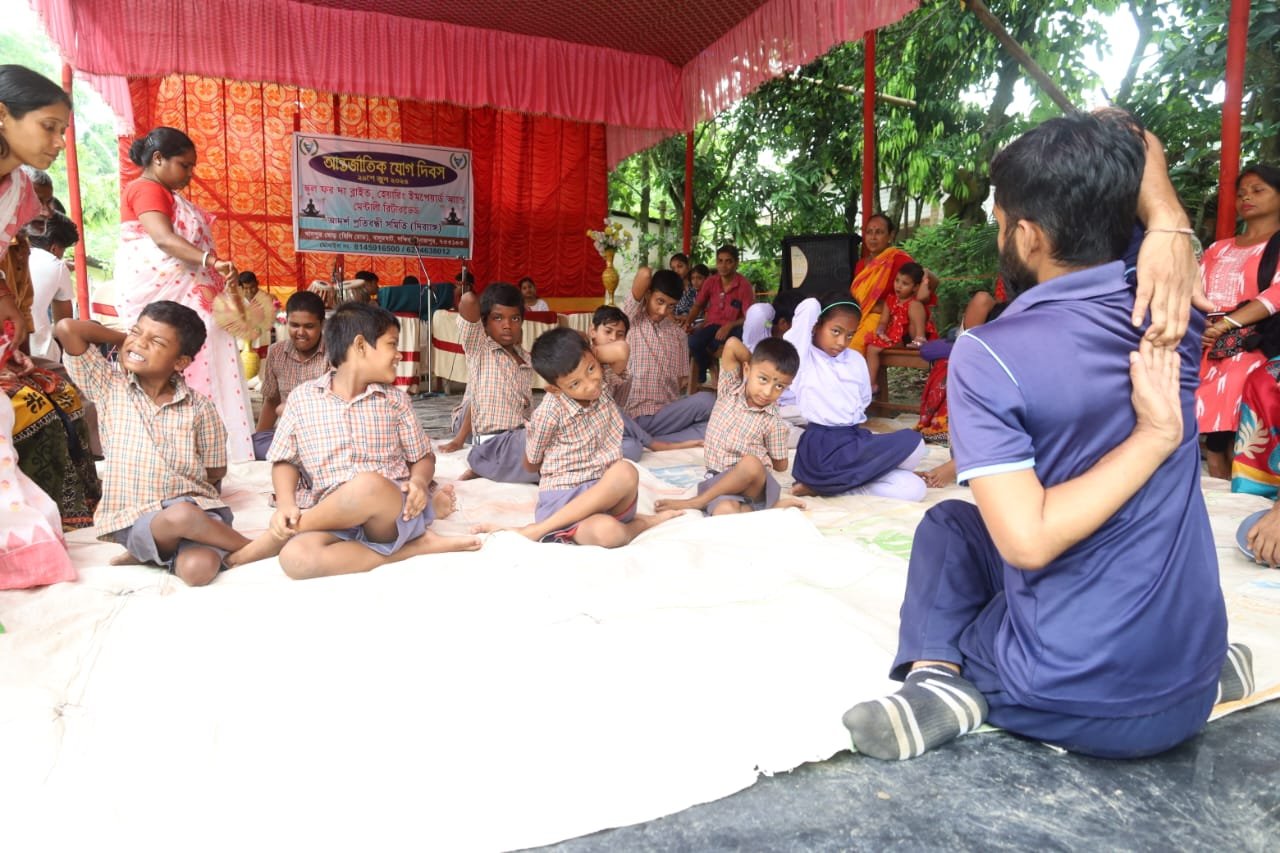
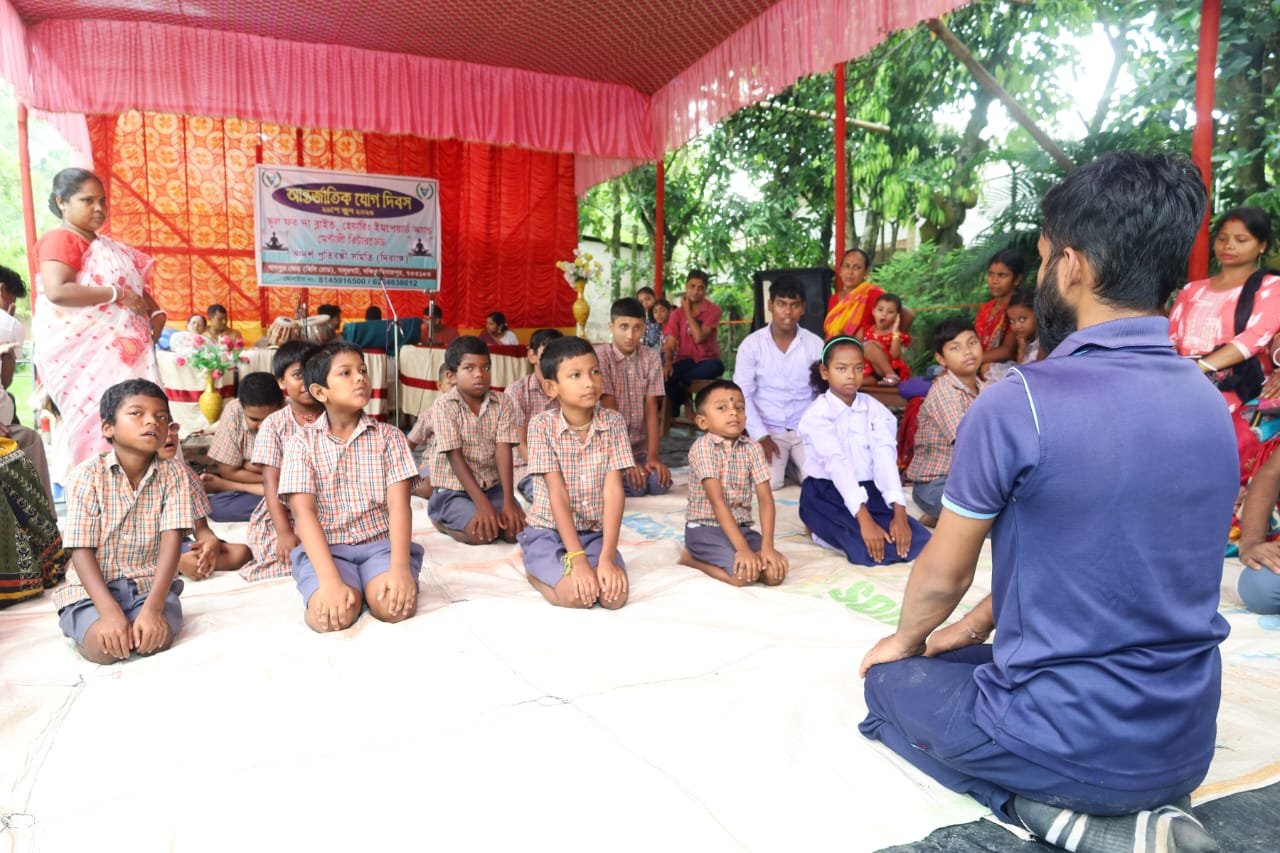
On 21st June 2025, we joyfully celebrated International Yoga Day, turning our school into a hub of harmony, inclusivity, and cultural pride. Students, teachers, parents, and samity members came together as one family, proving that yoga is a universal practice, open to all abilities.
The day began with a serene yoga session on the school grounds. With the guidance of trained instructors, students practised asanas, pranayama, and meditation techniques tailored to suit different physical abilities. Special modifications ensured that students with mobility challenges or other disabilities could participate comfortably and meaningfully. The sight of children of all abilities moving together, each at their own pace but in shared spirit, was a powerful reminder of unity in diversity.
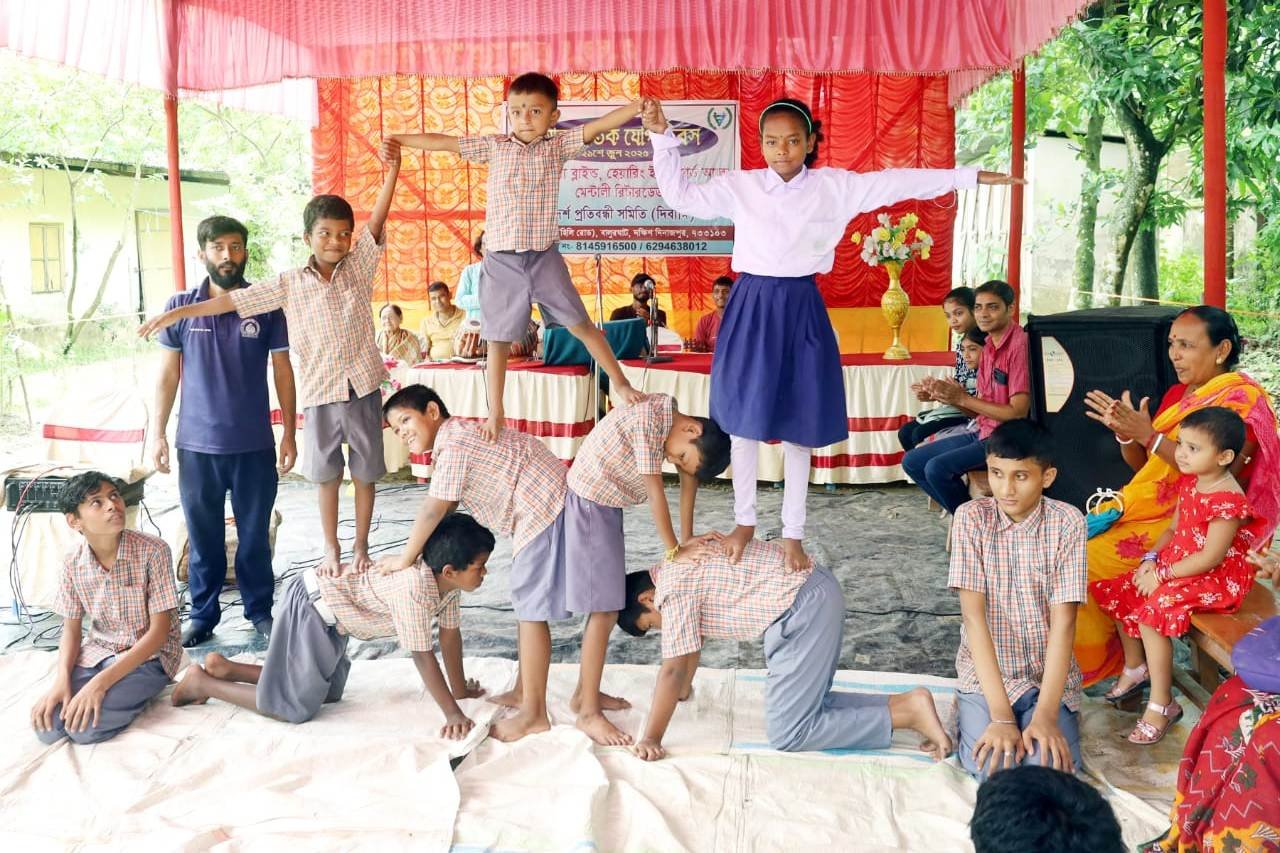
Following the yoga session, the celebration continued with a vibrant cultural programme. Students sang melodious songs, recited poems and delivered heartfelt speeches. Some performances were specially designed to highlight the talents of our differently-abled students, allowing them to take centre stage and receive the applause they so richly deserve.
Our samity members played a vital role in making the event inclusive and encouraging. Their presence and support ensured that every child felt valued, confident, and part of the APS family.
This celebration was more than an activity — it was a message. Yoga is not limited by age, strength, or ability; it is a bridge that connects us all, teaching balance, patience, and acceptance. At APS, we remain committed to building an environment where every child, regardless of disability, can live, learn, and celebrate with dignity.
Identification of persons with disabilities through conducting camps in various blocks.
Adarsha Pratibandhi Samity (Dibyanga) is dedicated to uplifting and empowering individuals with disabilities by ensuring they receive the necessary support, benefits, and opportunities for a dignified life. One of the key activities undertaken by the organization is the Identification of Persons with Disabilities (PwDs) through Camps in Various Blocks. These camps serve as a crucial first step in recognizing individuals who require assistance and linking them to government schemes, rehabilitation services, and skill development programs.

The objective of the Activity:
- To identify individuals with different types of disabilities across various blocks, especially in rural and underserved areas.
- To assess the specific needs of each identified person and guide them toward available medical aid, assistive devices, education, and employment opportunities.
- To spread awareness among communities regarding disability rights, government schemes, and the importance of inclusive development.
- To ensure that eligible individuals receive a Disability Certificate and are registered in official databases for continuous support and benefits.
Implementation Strategy:
- Pre-Camp Awareness & Outreach:
- Conduct awareness drives through local announcements, posters, and collaboration with village leaders, schools, and healthcare centers.
- Mobilize volunteers and health professionals to encourage persons with disabilities and their families to attend the camp.
- Camp Setup & Execution:
- Organize identification camps in strategic locations within different blocks, ensuring accessibility for all attendees.
- Deploy a team of medical professionals, social workers, and government officials to assess disabilities as per legal classifications.
- Arrange facilities for on-the-spot medical check-ups, documentation support, and preliminary assessments for assistive devices.
- Documentation & Certification Process:
- Assist individuals in registering for Disability Certificates issued by the government.
- Provide guidance on securing Unique Disability ID (UDID) cards to ensure long-term benefits.
- Referral to Rehabilitation & Support Services:
- Connect identified individuals with hospitals, therapy centers, and rehabilitation programs for further medical care.
- Offer information on special schools, vocational training centers, and employment opportunities for differently-abled persons.
- Post-Camp Follow-Up & Monitoring:
- Track the progress of individuals identified in the camps, ensuring they receive the necessary benefits and support.
- Organize periodic reviews and additional support initiatives based on the needs of registered persons.
Expected Outcomes:
- A structured database of persons with disabilities within the covered blocks.
- Increased awareness and accessibility to government disability welfare schemes.
- Greater participation of disabled individuals in education, employment, and skill development programs.
- Strengthened advocacy for disability rights and inclusion in mainstream society.
Through these identification camps, Adarsha Pratibandhi Samity (Dibyanga) ensures that no individual with a disability is left behind, paving the way for an inclusive and supportive society where they can lead empowered and self-sufficient lives.
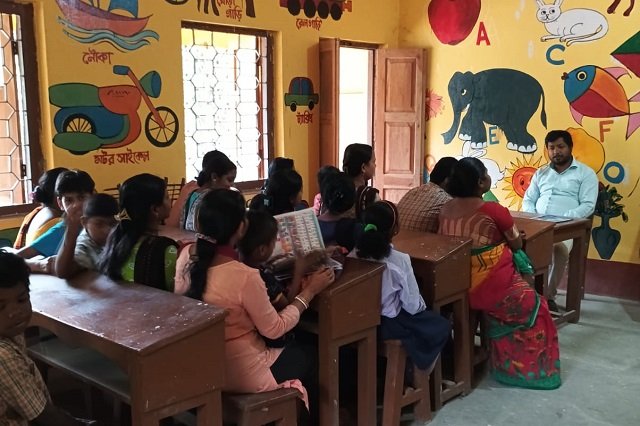
Councelling of persons with disabilities including their parents
The counseling sessions aim to provide emotional, psychological, and social support to persons with disabilities and their families, helping them overcome challenges, develop resilience, and integrate better into society. Adarsha Pratibandhi Samity (Dibyanga) organizes regular counseling sessions for persons with disabilities and their parents, addressing various aspects such as emotional well-being, self-confidence, skill development, social inclusion, and rights awareness. These sessions are conducted by trained psychologists, rehabilitation experts, and social workers, ensuring a comprehensive approach to the holistic development of individuals with disabilities.
Key Components of the Counseling Program:
- Psychological Support:
- Helping individuals with disabilities cope with mental stress, anxiety, and societal stigma.
- Encouraging self-acceptance and boosting self-confidence.
- Addressing behavioral challenges and emotional difficulties.
- Parental Guidance and Awareness:
- Educating parents on understanding and supporting their child’s unique needs.
- Training parents to nurture independence in their children.
- Providing guidance on available government schemes, legal rights, and financial aid.
- Educational and Vocational Counseling:
- Assisting children and young adults with disabilities in choosing suitable educational paths.
- Helping in skill training and career counseling for employment opportunities.
- Collaborating with institutions and employers to create inclusive workspaces.
- Social Inclusion and Relationship Building:
- Encouraging participation in social and community activities.
- Addressing social stigma and fostering an inclusive mindset in families and communities.
- Conducting interactive sessions for siblings and extended family members to create a supportive environment.
- Legal and Rights Awareness:
- Informing families about disability rights, reservations, and benefits under government policies.
- Providing assistance in obtaining disability certificates, scholarships, and financial support.
- Health and Rehabilitation Counseling:
- Offering guidance on medical treatments, therapies, and assistive devices.
- Educating on proper nutrition, hygiene, and lifestyle for better physical and mental health.
Implementation Approach:
- One-on-One Counseling: Personalized support for individuals and families facing specific challenges.
- Group Counseling Sessions: Encouraging peer interaction and shared learning.
- Workshops and Seminars: Engaging experts to provide in-depth knowledge on disability-related issues.
- Helpline Support: Providing remote assistance for parents and persons with disabilities.
Expected Impact:
- Improved mental and emotional well-being of individuals with disabilities.
- Increased awareness and preparedness among parents to support their children effectively.
- Enhanced access to education, employment, and social opportunities for persons with disabilities.
- Reduction in stigma and better societal integration of disabled individuals.
Adarsha Pratibandhi Samity (Dibyanga) remains committed to creating a more inclusive society where persons with disabilities and their families feel empowered, supported, and valued.
Need Assessment of Persons with Disabilities
A structured need assessment is essential to provide appropriate interventions for PwDs. Adarsha Pratibandhi Samity (Dibyanga) conducts individualized need assessments through home visits, surveys, and professional evaluations to determine:

a. Medical & Rehabilitation Needs
- Assessing the type and degree of disability (physical, sensory, intellectual, or multiple disabilities).
- Identifying the need for assistive devices (wheelchairs, hearing aids, prosthetics, Braille equipment, etc.).
- Recommending physiotherapy, occupational therapy, speech therapy, and special education services.
b. Educational Needs
- Evaluating the learning capabilities and special education requirements of children with disabilities.
- Recommending inclusive or special schools, digital learning tools, and assistive educational technology.
- Identifying scholarships and academic support programs.
c. Employment & Livelihood Needs
- Analyzing skill levels and recommending vocational training programs.
- Identifying suitable self-employment or job opportunities.
- Connecting PwDs with government and NGO employment initiatives.
d. Social and Environmental Accessibility Needs
- Assessing accessibility barriers in homes, workplaces, and public spaces.
- Identifying the need for ramps, tactile paths, sign language interpretation, or transport assistance.
- Recommending improvements for inclusive community participation.
e. Financial & Welfare Needs
- Identifying economically vulnerable PwDs who require financial aid or livelihood assistance.
- Facilitating access to disability pensions, insurance, and government schemes.
Connecting families with funding sources for medical care and assistive devices.

Basic Education, who are literate, with provision of educational materials.
Adarsha Pratibandhi Samity (Dibyanga) is committed to uplifting the disabled sections of society by ensuring equal access to education and essential learning resources. One of our key initiatives is Basic Education for the Literate with the Provision of Educational Materials, designed to support individuals with disabilities who have a fundamental level of literacy but require further guidance and educational tools to enhance their knowledge and skills.
This initiative aims to bridge the educational gap by providing structured learning opportunities,
along with necessary educational materials, to individuals with disabilities. Many literate individuals within this community often lack access to books, stationery, and specialized learning aids, which hinders their ability to progress academically or develop essential life skills. By addressing this challenge, we aim to empower them to lead independent and self-sufficient lives.
Key Activities Under the Initiative
- Supplementary Learning Programs
- Conducting literacy enhancement sessions to strengthen reading, writing, and comprehension skills.
- Organizing interactive learning sessions focusing on practical knowledge and vocational education.
- Distribution of Educational Materials
- Providing books, notebooks, pens, and other essential stationery items.
- Offering assistive learning devices such as Braille books for visually impaired individuals and audio learning tools for those with hearing impairments.
- Specialized Support for Different Disabilities
- Tailored educational support based on the specific needs of individuals with physical, visual, or hearing disabilities.
- Collaboration with trained educators and volunteers to assist in the learning process.
- Encouraging Digital Literacy
- Introducing basic computer and mobile literacy programs to ensure individuals can access digital education resources.
- Providing necessary digital tools and accessibility features for enhanced learning experiences.
- Parental and Community Involvement
- Conducting awareness sessions for parents and caregivers on how to support the educational journey of disabled individuals.
- Encouraging community participation to create an inclusive and supportive learning environment.
Impact of the Initiative
- Enables individuals with disabilities to continue their educational journey despite financial or logistical constraints.
- Fosters self-reliance by equipping them with knowledge, skills, and resources.
- Encourages social integration by creating inclusive learning spaces.
- Enhances opportunities for future employment or skill-based entrepreneurship.
At Adarsha Pratibandhi Samity (Dibyanga), we believe that education is a fundamental right for all, and through this initiative, we strive to ensure that no one is left behind due to disability. We invite individuals, organizations, and well-wishers to support our cause and contribute towards creating a more inclusive and educated society.
Medical Check-ups and Disability Preventive Treatment
Adarsha Pratibandhi Samity (Dibyanga) is committed to improving the health and well-being of individuals with disabilities by organizing regular medical check-ups and disability preventive treatment programs. These initiatives are designed to ensure early detection of health issues, provide essential medical support, and enhance the quality of life for people with disabilities.

Key Aspects of the Activity:
- Comprehensive Health Check-ups
- Regular medical camps are organized to assess the general health conditions of individuals with disabilities.
- Medical professionals, including doctors, physiotherapists, and occupational therapists, conduct thorough examinations, identifying health concerns such as malnutrition, respiratory issues, cardiovascular conditions, and neurological disorders.
- Special attention is given to common secondary conditions associated with disabilities, such as pressure sores, muscle contractures, joint deformities, and chronic pain.
- Disability-Specific Screening & Early Intervention
- The program includes screening for developmental delays and congenital disabilities in children to ensure early intervention.
- Neurological and musculoskeletal evaluations help detect mobility impairments, speech and hearing difficulties, and vision-related problems.
- Physiotherapy and rehabilitation experts provide guidance on postural management, assistive device recommendations, and exercises to improve mobility and prevent complications.
- Preventive Treatments & Therapy Sessions
- Specialized treatment is offered to prevent worsening conditions, including corrective therapy for physical disabilities, occupational therapy, and speech therapy for those with communication impairments.
- Nutritional counseling is provided to prevent deficiencies that can lead to further health complications.
- Immunization and preventive medicine are offered to protect against infections that can be particularly harmful to individuals with disabilities.
- Assistive Devices & Rehabilitation Support
- The program also facilitates access to mobility aids such as crutches, wheelchairs, hearing aids, prosthetic limbs, and orthotic braces, ensuring individuals can lead more independent lives.
- Regular monitoring of assistive devices ensures they are functioning properly and remain suitable for the user’s evolving needs.
- Awareness & Family Counseling
- Families and caregivers are educated on preventive care, home-based physiotherapy, and adaptive techniques to enhance daily living for persons with disabilities.
- Counseling sessions focus on mental health support, social integration, and confidence-building.
By conducting these medical check-ups and disability preventive treatment programs, Adarsha Pratibandhi Samity (Dibyanga) aims to promote healthier lives, prevent complications, and enhance the overall well-being of individuals with disabilities. This initiative not only helps in providing timely medical intervention but also fosters independence, dignity, and a better quality of life for the disabled community.

Certification through the Government Medical Board with categorization and % of disability.
One of the key activities of Adarsha Pratibandhi Samity (Dibyanga) is to assist individuals with disabilities in obtaining official certification through the Government Medical Board. This certification is essential for disabled individuals to access various government benefits, including financial aid, reservations in education and employment, medical assistance, and social security schemes.
Process of Disability Certification
Our organization helps individuals through the following steps:
- Awareness & Information Dissemination
- Conducting awareness camps and outreach programs to educate disabled individuals and their families about the importance of disability certification.
- Providing information on the legal rights and benefits available under the Rights of Persons with Disabilities (RPWD) Act, 2016.
- Assisting in understanding eligibility criteria for different disability categories.
- Documentation Assistance
- Helping applicants gather required documents, including medical history, identity proof, and residence proof.
- Providing support in filling out application forms accurately.
- Medical Examination & Certification
- Coordinating with government hospitals and medical boards to schedule official disability assessments.
- Ensuring that applicants receive proper medical evaluation by certified government doctors.
- Assisting individuals in obtaining the Disability Certificate, which categorizes their disability based on the percentage of impairment.
Categorization & Percentage of Disability
Disabilities are classified into different categories, and the degree of impairment is expressed as a percentage, which determines the level of assistance and benefits the individual can receive. The primary categories include:
- Locomotor Disability (affecting movement due to orthopedic conditions, polio, or paralysis)
- 40% – 70%: Partial disability, eligible for supportive aids, workplace accommodations.
- More than 70%: Severe disability, eligible for higher benefits, personal assistance schemes.
- Visual Impairment (blindness or low vision)
- 40% – 100%: Eligible for assistive devices, educational support, and job reservations.
- Hearing Impairment
- 40% – 70%: Moderate hearing loss, eligible for hearing aids and special education.
- More than 70%: Profound hearing loss, eligible for disability pension and communication aids.
- Intellectual & Developmental Disabilities (Autism, Cerebral Palsy, Down Syndrome, etc.)
- 40% – 100%: Special education, vocational training, lifelong support programs.
- Mental Illness & Psychiatric Disabilities
- 40% – 100%: Medical treatment, rehabilitation programs, disability pension.
- Multiple Disabilities
- Individuals with multiple impairments receive comprehensive support, including medical care, financial aid, and vocational training.
Post-Certification Support
After obtaining the certification, Adarsha Pratibandhi Samity (Dibyanga) helps individuals in:
✔ Availing government welfare schemes (disability pensions, free medical treatment, skill development programs).
✔ Securing employment & education reservations under disability quotas.
✔ Procuring assistive devices like wheelchairs, hearing aids, and prosthetics.
✔ Legal support for accessing rights and benefits under disability laws.
Through this initiative, Adarsha Pratibandhi Samity (Dibyanga) aims to ensure that every disabled individual receives official recognition of their condition, allowing them to lead a dignified and independent life with access to essential resources.
Recreation, Sports, Games, and tournaments with prizes and citations.
Adarsha Pratibandhi Samity (Dibyanga) believes that every individual, regardless of physical or mental ability, has the right to engage in recreation, sports, and games that promote their well-being and social inclusion. To empower the disabled community and encourage their participation in mainstream society, the organization actively organizes various sports tournaments, recreational activities, and competitive games specially designed for persons with disabilities. These initiatives foster physical fitness, teamwork, confidence, and self-esteem while breaking societal barriers.
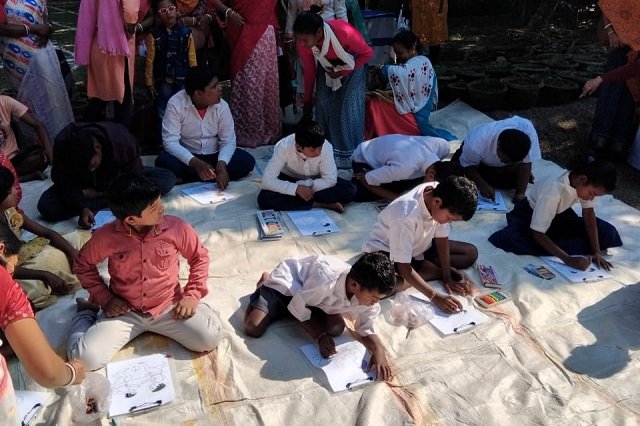
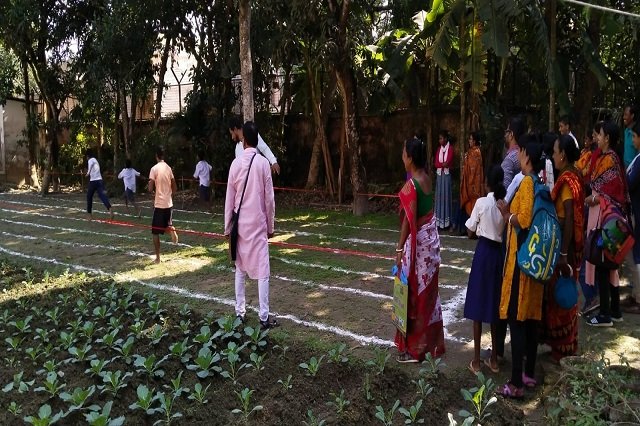
a. Inclusive Sports Tournaments
Adarsha Pratibandhi Samity (Dibyanga) hosts annual and seasonal sports tournaments where participants showcase their talents in adaptive sports such as:
- Wheelchair Basketball – Encouraging mobility and teamwork among wheelchair users.
- Para Athletics – Including races, javelin throws, and long jumps tailored to different disability categories.
- Blind Cricket – Providing visually impaired individuals with an opportunity to engage in competitive sports.
- Seated Volleyball – Making volleyball accessible for those with lower limb disabilities.
- Table Tennis & Chess – Intellectual and strategic games that enhance cognitive skills and hand-eye coordination.
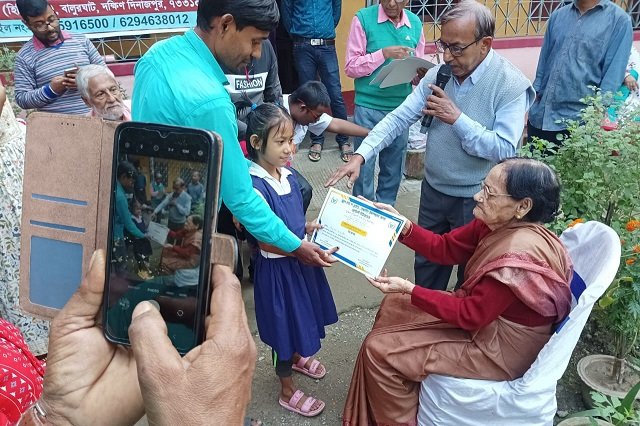
The tournaments are divided into different age groups and disability categories, ensuring fair competition and maximum participation. Winners and outstanding performers are recognized with prizes, medals, trophies, and citations to honor their achievements and encourage continuous involvement.
b. Recreational Activities for Engagement and Fun
Apart from competitive sports, the organization promotes recreational activities that offer joy and relaxation. Some of these include:
- Music and Dance Therapy Sessions – Helping participants express themselves through art.
- Yoga and Meditation Camps – Enhancing physical and mental well-being.
- Board Games & Storytelling Sessions – Encouraging mental stimulation and creativity.
- Cultural Festivals & Talent Shows – Providing a platform for disabled individuals to showcase their artistic abilities.
These activities not only enhance physical and mental health but also create a sense of belonging and community among participants.
c. Recognition and Motivation
To encourage and motivate participants, Adarsha Pratibandhi Samity (Dibyanga) ensures that all efforts are recognized through:
- Certificates of Participation for all attendees.
- Trophies and Medals for winners in different sports and games.
- Special Awards for outstanding players and achievers.
- Cash Prizes & Scholarships for those showing exceptional talent, helping them pursue professional training in sports.
d. Collaboration with National & International Organizations
To provide greater opportunities, the organization collaborates with Paralympic Associations, Special Olympics Committees, and Disability Welfare Departments to help talented athletes reach national and international platforms.
By organizing recreational and sports events, Adarsha Pratibandhi Samity (Dibyanga) empowers individuals with disabilities, promotes inclusivity, and builds a more accepting and supportive society. Through these initiatives, participants not only enhance their physical fitness and social skills but also gain confidence to challenge societal limitations and achieve their full potential.
Awareness Generation on Early Childhood Disability Identification and Maternal Care Across Neo-Natal, Natal, Pre-Natal & Post-Natal Stages
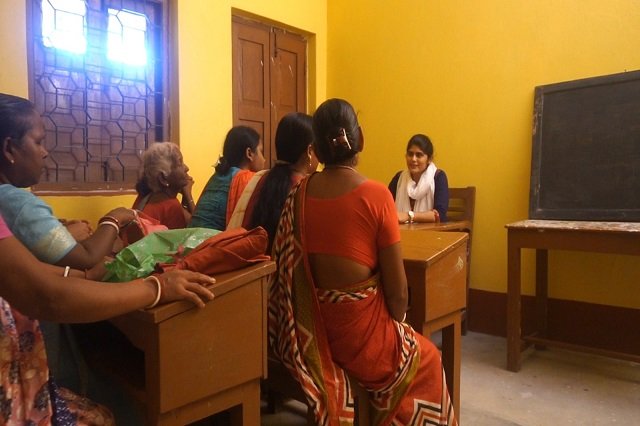
Adarsha Pratibandhi Samity (Dibyanga) is dedicated to improving the lives of people with disabilities by ensuring early identification, intervention, and comprehensive care. This awareness generation program aims to educate communities, especially mothers and healthcare workers, about the importance of early childhood disability identification and maternal care across all crucial stages—Pre-Natal, Natal, Neo-Natal, and Post-Natal. The goal is to reduce the risk of disabilities by promoting timely healthcare, nutritional guidance, and intervention strategies.
Key Focus Areas:
a. Pre-Natal Care (Before Birth)
- Educating expecting mothers about proper nutrition, including essential vitamins like folic acid to prevent neural tube defects.
- Spreading awareness about the dangers of alcohol, tobacco, and drug use during pregnancy.
- Promoting regular medical check-ups and ultrasounds to detect abnormalities early.
- Encouraging vaccinations such as rubella to prevent congenital disabilities.
- Emphasizing the importance of managing chronic illnesses like diabetes and hypertension during pregnancy.
b. Natal Care (During Birth)
- Ensuring safe and hygienic deliveries to prevent birth-related complications.
- Training healthcare workers on proper delivery techniques to avoid birth asphyxia and trauma.
- Educating about the importance of skilled birth attendants to handle premature births and emergency cases.
- Preventing oxygen deprivation (hypoxia) during labor, a major cause of cerebral palsy.
c. Neo-Natal Care (First 28 Days After Birth)
- Promoting immediate and exclusive breastfeeding for at least six months to enhance immunity.
- Training mothers on how to detect early signs of disabilities such as poor muscle tone, delayed reflexes, and feeding difficulties.
- Educating on neonatal jaundice and its timely treatment to prevent brain damage.
- Encouraging hearing and vision screenings to identify sensory impairments early.
- Raising awareness about the importance of Kangaroo Mother Care (skin-to-skin contact) for premature and low-birth-weight babies.
d. Post-Natal Care (Up to 5 Years)
- Conducting growth monitoring and developmental milestone tracking to detect any delays.
- Providing vaccinations against preventable diseases that may cause disabilities, such as polio and meningitis.
- Educating parents on common warning signs of developmental disabilities, including autism, cerebral palsy, and intellectual disabilities.
- Promoting speech therapy and physiotherapy for children with detected disabilities.
- Encouraging inclusive early education and parental support for children with special needs.
Implementation Strategy:
- Community Awareness Camps: Conducting sessions in rural and urban areas to educate mothers, caregivers, and healthcare workers.
- Collaboration with Healthcare Centers: Partnering with hospitals and clinics to ensure proper screenings and interventions.
- Training Workshops for Anganwadi & ASHA Workers: Equipping grassroots healthcare workers with the knowledge to detect and refer children with developmental concerns.
- Distribution of IEC Materials: Providing posters, leaflets, and booklets on maternal and child health care.
- Digital Outreach: Using social media, WhatsApp groups, and virtual workshops to spread awareness.
- Home-Based Guidance Programs: Offering counseling for mothers of high-risk babies at their homes.
Expected Outcomes:
- Increased awareness and early detection of childhood disabilities.
- Reduced risk of preventable disabilities through better maternal health practices.
- Enhanced knowledge among healthcare workers, leading to better neonatal and postnatal care.
- Strengthened support systems for mothers and children with disabilities.
- A step toward an inclusive society where every child, regardless of ability, gets equal opportunities.
By implementing this program, Adarsha Pratibandhi Samity (Dibyanga) aims to create a well-informed society that prioritizes early intervention, ensuring that every child receives the best possible start in life.
Socialization of persons with disabilities into the mainstream of the community.
Adarsha Pratibandhi Samity (Dibyanga) is committed to ensuring the holistic development and empowerment of persons with disabilities (PWDs) by fostering their social integration into the mainstream community. To achieve this, we organize various programs and initiatives that promote inclusivity, accessibility, and equal opportunities for disabled individuals.
Key Objectives:
- To create awareness and reduce stigma associated with disabilities.
- To facilitate the active participation of PWDs in social, educational, and economic activities.
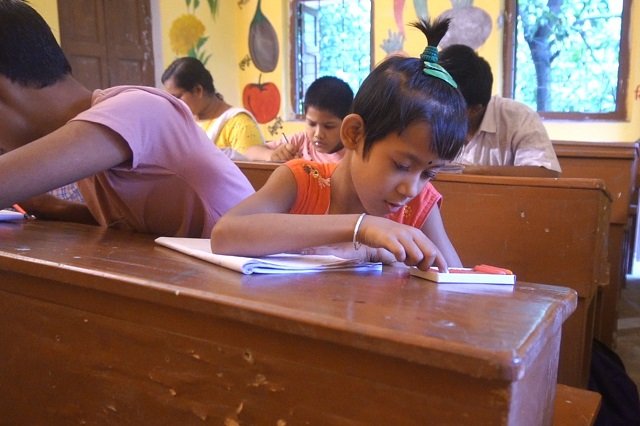
- To provide skill training, employment opportunities, and community engagement platforms.
- To promote barrier-free infrastructure and accessible public spaces.
- To encourage inclusive education and sports.
Major Activities:
- Community Awareness and Sensitization Campaigns:
- Conducting workshops and seminars for the general public to promote understanding and empathy toward PWDs.
- Organizing disability awareness rallies, street plays, and media campaigns to challenge societal biases.
- Educational and Vocational Inclusion:
- Encouraging schools and colleges to adopt inclusive education policies.
- Offering scholarships and academic assistance to disabled students.
- Providing vocational training in trades such as handicrafts, computer skills, and other employment-driven courses.
- Employment and Economic Empowerment:
- Collaborating with businesses and industries to create job opportunities for PWDs.
- Promoting self-employment through skill-building initiatives and financial assistance.
- Organizing job fairs exclusively for persons with disabilities.
- Sports, Culture, and Recreational Activities:
- Organizing adaptive sports events and talent competitions.
- Encouraging participation in cultural activities such as music, dance, and drama.
- Conducting inclusive community celebrations to enhance interaction between PWDs and the mainstream population.
- Accessible Infrastructure and Mobility Support:
- Advocating for disability-friendly infrastructure in schools, offices, and public places.
- Providing assistive devices such as wheelchairs, hearing aids, and mobility aids.
- Conducting training on independent living and self-care skills.
- Peer Support and Networking:
- Forming support groups and self-help communities for PWDs.
- Encouraging mentorship programs where successful PWDs guide and motivate others.
- Facilitating social gatherings and discussion forums to address concerns and share experiences.
Through these activities, Adarsha Pratibandhi Samity (Dibyanga) aims to break down barriers and ensure that persons with disabilities are recognized as valuable contributors to society. Our goal is to create an inclusive world where every individual, regardless of ability, has the opportunity to thrive and lead a dignified life.
Creation of a disabled-friendly environment such as Ramps, Toilets, and General provisions.
At Adarsha Pratibandhi Samity (Dibyanga), we firmly believe that accessibility is a fundamental right, not a privilege. To ensure a more inclusive society where individuals with disabilities can navigate spaces with dignity and independence, we actively work on creating a disabled-friendly environment by implementing essential infrastructural modifications. Our focus includes constructing ramps, accessible toilets, and other necessary provisions to facilitate ease of movement for people with disabilities in public and private spaces.
- Installation of Wheelchair Ramps
One of the biggest challenges faced by individuals with mobility impairments is the lack of ramps in public buildings, offices, educational institutions, and healthcare centers. To address this issue, we:
Construct ramps with proper slopes, handrails, and non-slip surfaces in schools, community centers, and government offices.
Ensure compliance with universal design standards so that ramps are not too steep and are easily accessible.
Advocate for ramp installation in public transport facilities, ensuring equal travel opportunities for all.
- Accessible and Inclusive Toilets
Many people with disabilities struggle with using public restrooms due to inaccessible design and lack of supportive infrastructure. To improve sanitation facilities, we:
Construct disabled-friendly toilets with adequate space for wheelchair movement.
Install grab bars, handrails, and lowered sinks for easy access.
Ensure non-slippery flooring and well-lit interiors for better safety and convenience.
Advocate for gender-inclusive, disabled-friendly restrooms in public spaces.
- General Provisions for Accessibility
Beyond ramps and toilets, we focus on several other aspects of creating a truly inclusive environment:
Tactile paving and braille signage in schools, hospitals, and public offices to assist individuals with visual impairments.
Audio assistance systems in public places like railway stations, banks, and government buildings.
Reserved parking spaces and easy access pathways for people with disabilities.
Training programs for businesses and institutions on making their premises more disability-friendly.
Through these initiatives, Adarsha Pratibandhi Samity (Dibyanga) is working towards breaking physical barriers and ensuring that every person, regardless of ability, has equal access to public spaces. Our goal is to promote independence, dignity, and inclusion, ensuring that individuals with disabilities can fully participate in society without obstacles.